
The sun dips below endless amber dunes, casting long shadows as your camel caravan moves silently across the Sahara. Stars begin piercing the deepening blue sky, and for the first time in years, you hear nothing but wind whispering across ancient sand. This isn’t just a vacation—it’s the kind of transformative experience that makes a desert tour Morocco adventure one of the most sought-after journeys in North Africa.
Planning a Morocco desert tour can feel overwhelming with countless operators, varying itineraries, and destinations like Merzouga and Zagora competing for your attention. Should you join a group tour or splurge on a private experience? Is a 2-day trip enough, or do you need three full days to truly experience the Sahara? What’s the real difference between those towering Erg Chebbi dunes and the remote Erg Chigaga?
This comprehensive guide answers every question you have about desert tours in Morocco. You’ll discover exactly what to expect on your journey, how to choose the right tour type for your budget and travel style, what to pack for dramatic temperature swings, and insider tips that most tourists only learn after making costly mistakes. Whether you’re departing from Marrakech or Fes, traveling solo or with family, seeking luxury or authentic adventure, you’ll find everything you need to plan an unforgettable Sahara experience.
Understanding Desert Tours in Morocco: The Basics
A Morocco Sahara desert tour is a multi-day excursion that takes you from Morocco’s imperial cities deep into the golden dunes of the Sahara Desert. These journeys typically combine scenic drives through the Atlas Mountains, visits to historic kasbahs and Berber villages, and an overnight stay in a traditional desert camp where you’ll sleep under some of the clearest night skies on Earth.
Most tours range from one to four days, though three-day itineraries strike the perfect balance between travel time and desert immersion. A typical Merzouga desert tour includes transportation in comfortable 4×4 vehicles or minivans, accommodation in both mountain guesthouses and desert camps, some meals, a camel trek into the dunes, and a knowledgeable driver-guide who brings Morocco’s landscapes and culture to life.
The experience goes far beyond simply seeing sand dunes. You’ll traverse the dramatic Tizi n’Tichka mountain pass at 2,260 meters elevation, explore the UNESCO World Heritage site of Ait Benhaddou where movies like Gladiator were filmed, walk through the towering 300-meter cliffs of Todra Gorge, and witness sunrises that paint the desert in impossible shades of gold and rose. You’ll share mint tea with Berber families, learn about nomadic traditions that have endured for centuries, and discover why silence can be so profound.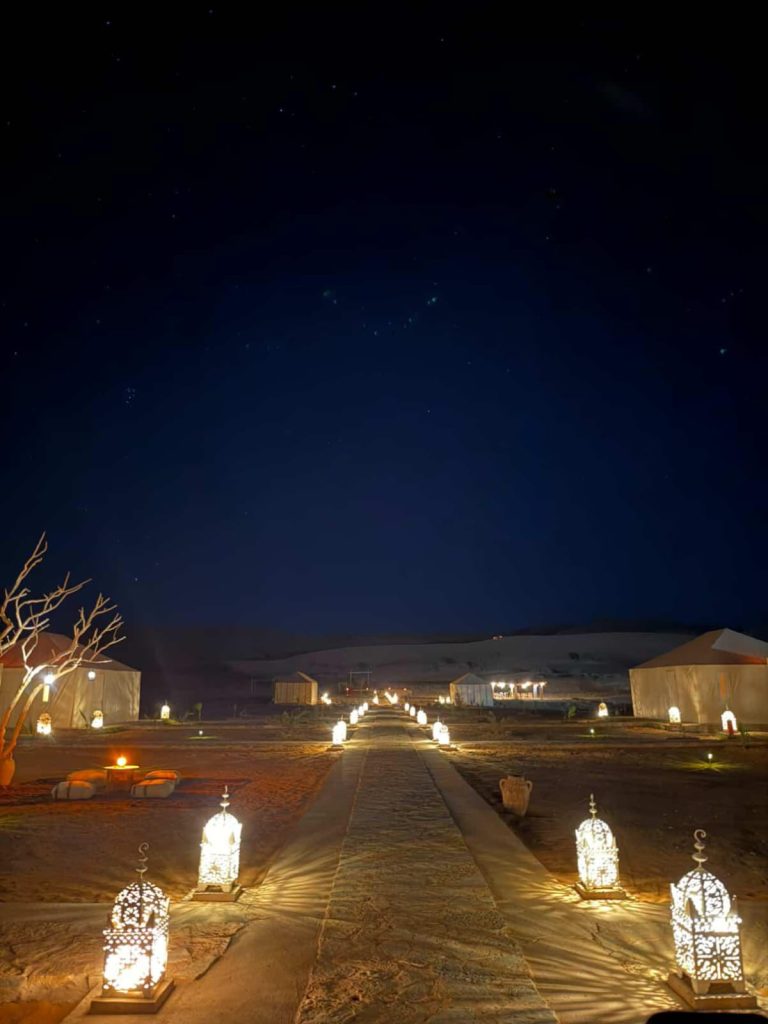
When to Visit the Sahara Desert
Timing dramatically impacts your desert tour experience. Morocco’s Sahara undergoes extreme temperature variations between seasons, and choosing the right period can mean the difference between comfortable adventure and genuine suffering.
Spring (March to May) ranks as the most popular season for desert tours Morocco. Daytime temperatures hover between 25-30°C (77-86°F)—warm enough for comfort but not oppressively hot. Nights cool to 10-15°C (50-59°F), perfect for sitting around the campfire without freezing. The desert blooms with surprising vegetation after winter rains, and clear skies provide excellent visibility. Book at least two months ahead during this peak season, as quality tours fill quickly.
Fall (September to November) offers equally pleasant conditions with similar temperatures and fewer crowds than spring. The desert’s summer heat has dissipated, but cold winter nights haven’t yet arrived. Photography enthusiasts particularly appreciate fall’s golden light and dramatic cloud formations.
Summer (June to August) presents serious challenges. Daytime temperatures regularly exceed 45°C (113°F), making midday activities nearly impossible. The long drive becomes genuinely uncomfortable, and even desert-dwelling Berbers retreat to shaded areas during peak heat. However, budget travelers benefit from significantly lower prices—sometimes 30-40% less than peak season—and camps are rarely crowded. If you’re heat-tolerant and traveling on a tight budget, early morning departures and afternoon siestas make summer tours feasible.
Winter (December to February) brings cold nights that drop to 0-5°C (32-41°F), occasionally dipping below freezing. Daytime temperatures remain pleasant at 15-20°C (59-68°F), but you’ll need serious cold-weather gear for the overnight desert portion. Many travelers underestimate winter’s severity and suffer through frigid nights in inadequate clothing. The reward? Crystal-clear skies perfect for stargazing and Milky Way photography, empty dunes, and rock-bottom prices.
Where Desert Tours Begin: Choosing Your Starting Point
Your departure city significantly impacts your desert tour experience, affecting both travel time and itinerary options.
Marrakech serves as the most popular starting point for Sahara Desert tours in Morocco. The journey to Merzouga takes approximately 9 hours (565 kilometers), with the route crossing the spectacular High Atlas Mountains. You’ll have ample opportunities for photos at mountain passes, stopping at Ait Benhaddou and Ouarzazate along the way. The long drive means less time in the actual desert compared to closer starting points, but Marrakech’s international airport and tourist infrastructure make it the most convenient choice for international visitors.
Fes offers a slightly shorter route to Merzouga at around 8 hours (470 kilometers), taking you through the Middle Atlas Mountains and cedar forests where Barbary macaques roam freely. Tours from Fes often include stops at Ifrane—Morocco’s “Little Switzerland”—and the Ziz Valley’s dramatic palm groves. This route feels less traveled than the Marrakech corridor and provides different landscapes.
Ouarzazate, nicknamed the “Gateway to the Desert,” sits much closer to the Sahara at just 4-5 hours from Merzouga. If your schedule is tight or you want maximum time in the dunes with minimum driving, consider flying or traveling to Ouarzazate first, then starting your desert tour from there. This option works particularly well for travelers combining desert adventures with Morocco’s southern kasbahs and valleys.
Agadir serves beach-loving travelers who want to add a desert experience to their coastal vacation. The journey takes 10-12 hours, making it feasible only for 3-4-day tours. Some operators offer tours that begin in Marrakech and end in Agadir (or reverse), allowing you to experience different regions without backtracking.
Choosing Your Desert Destination: Merzouga vs. Zagora
Morocco’s Sahara offers several desert destinations, but two dominate the tourist landscape: Merzouga with its Erg Chebbi dunes, and Zagora as a gateway to smaller dunes or the more remote Erg Chigaga. Understanding their differences helps you choose the right destination for your Morocco desert experience.
Merzouga and Erg Chebbi: Morocco’s Iconic Desert
Merzouga has become synonymous with Moroccan desert tours, and for good reason. The nearby Erg Chebbi dunes stretch 28 kilometers long and reach heights up to 150 meters—tall enough that climbing to the top leaves you genuinely breathless, both from exertion and the view. These are the archetypal Sahara dunes you’ve seen in photographs: smooth, sculptural mountains of golden sand that shift and reshape with every wind.
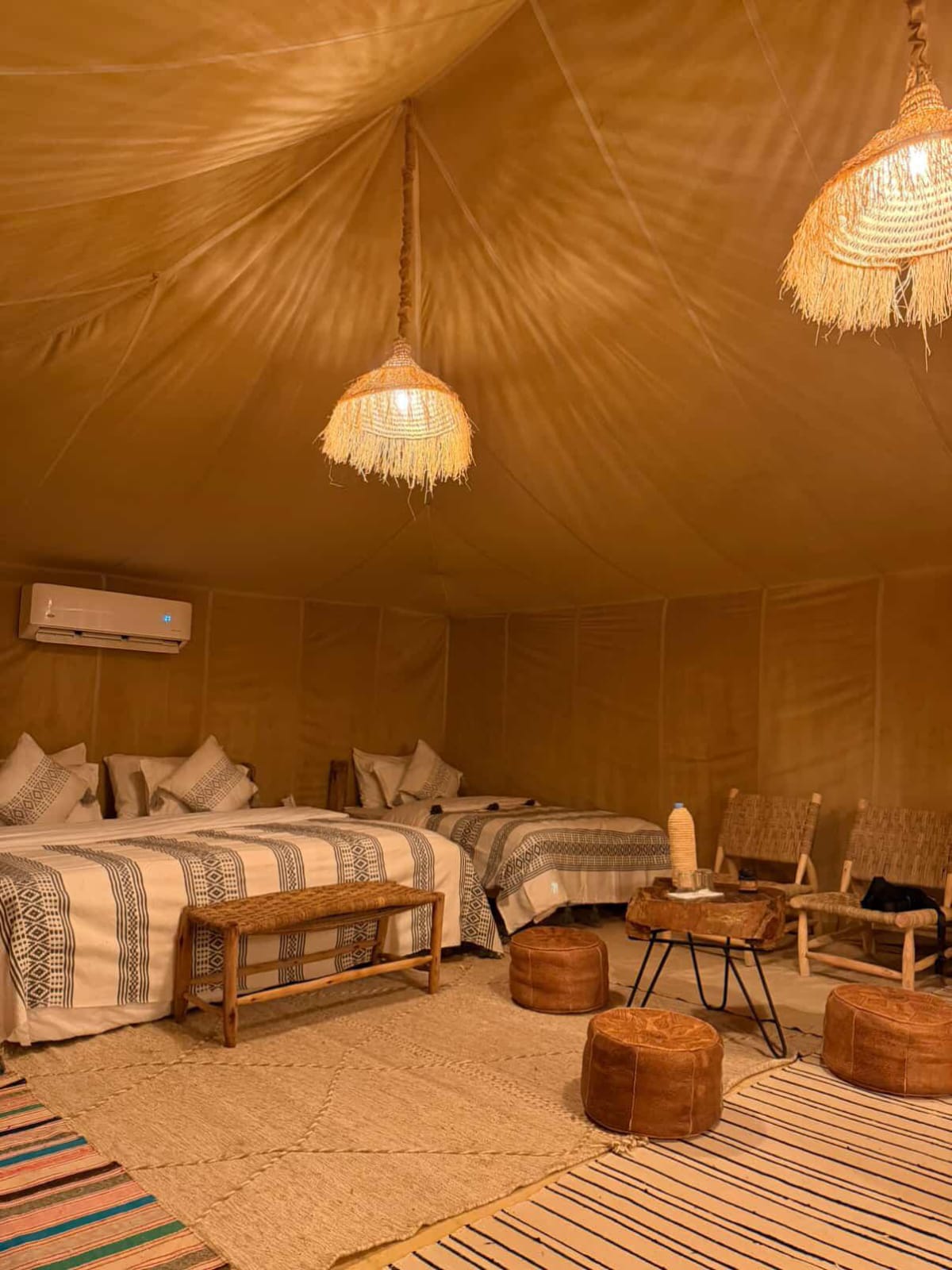
The small town of Merzouga sits right at the dune line, making logistics simple. You’ll transfer from your vehicle to camels (or 4x4s for those who prefer) for a relatively short 1.5-2 hour journey into the desert. Desert camps range from basic Berber-style tents with shared facilities to luxury accommodations with private bathrooms, real beds, and even air conditioning.
Activities abound in Merzouga. Beyond the classic camel trek and overnight camping, you can try sandboarding down massive dunes, take quad bike tours through the desert, visit nearby fossil workshops, meet nomadic families still living traditional lifestyles, or simply climb to a high dune for sunset and watch the landscape transform from gold to orange to deep purple.
The main downside? Merzouga’s popularity means crowds, especially during peak season. You might share your sunrise dune with fifty other tourists, and convoys of tour groups arrive simultaneously at camps. If solitude is your priority, consider visiting during shoulder season or exploring more remote options.
Zagora: The Closer Alternative
When tour operators advertise desert tours from Marrakech, many actually mean Zagora, not Merzouga. Located about 6 hours from Marrakech (compared to Merzouga’s 9 hours), Zagora allows for shorter 2-day itineraries that still include an overnight in the desert.
Here’s the crucial distinction tourists often miss: Zagora town itself isn’t in the desert. The actual dunes near Zagora are much smaller than Erg Chebbi—typically 10-15 meters high compared to Merzouga’s towering 150-meter peaks. These dunes lie about 90 minutes beyond Zagora in the M’hamid area, meaning you’ll still spend considerable time driving even after reaching Zagora.
Zagora tours work well for travelers with limited time who prioritize checking “the Sahara desert” off their list over experiencing the most dramatic dunes. The camps tend to be less crowded, and you’ll still enjoy camel rides, Berber hospitality, and star-filled skies. Just manage expectations—these aren’t the towering dunes that define Sahara imagery.
Erg Chigaga: For the Adventurous
True adventure seekers should consider Erg Chigaga, Morocco’s most remote major dune system. Located about 60 kilometers from M’hamid (beyond Zagora), these dunes rival Erg Chebbi in size and beauty but receive a fraction of the visitors. The final approach requires 4×4 vehicles capable of handling deep sand—no paved roads, no tour buses, no crowds.
Reaching Erg Chigaga typically requires a full day of travel from Marrakech, making this a better option for 4-day tours or for travelers with their own 4×4 vehicles. The reward is a genuinely isolated desert experience where you might be the only group visible from the highest dune. Facilities are more basic than Merzouga, but if authentic remoteness appeals to you more than creature comforts, Erg Chigaga delivers.
Types of Desert Tours: Finding Your Perfect Match
Desert tours in Morocco come in several formats, each with distinct advantages, drawbacks, and price points. Choosing the right type dramatically affects your experience and satisfaction.
Shared Group Tours: Budget-Friendly Social Adventure
Shared group tours remain the most popular option for solo travelers and budget-conscious visitors. You’ll join 8-15 other tourists in a minivan or small bus, following a fixed itinerary with predetermined stops and timing. Everyone shares accommodations, meals, and the same guide throughout the journey.
Pricing: Expect to pay €69-150 for a 3-day shared tour from Marrakech to Merzouga, depending on season and accommodation standards. This represents exceptional value considering transportation, two nights’ accommodation, most meals, and the camel trek are included.
Advantages: Beyond affordability, shared tours offer instant camaraderie. Solo travelers appreciate the built-in social aspect, often forming friendships that extend beyond the tour. Everything is organized—you simply show up and enjoy. The mix of nationalities and backgrounds enriches the experience through diverse perspectives.
Drawbacks: Fixed schedules mean limited flexibility. If you want to spend extra time at Ait Benhaddou taking photos, too bad—the group moves on schedule. You’re also dependent on group dynamics. One difficult personality can affect everyone’s experience, and different energy levels mean some people always feel rushed while others feel held back.
Best for: Solo travelers seeking social experiences, budget travelers maximizing value, first-time visitors to Morocco who appreciate structured tours, and anyone comfortable compromising personal preferences for group consensus.
Private Tours: Customized Comfort
Private tours put you and your travel companions in your own vehicle with a dedicated driver-guide. The itinerary can be adjusted on the fly—want to spend an extra hour at the Todra Gorge? No problem. Prefer to skip the fossil shops? Your guide accommodates.
Pricing: Private 3-day tours typically cost €300-500 per person for 2-4 people. The per-person cost decreases with larger private groups. A couple would pay around €600-800 total, while a family of four might pay €1,200-1,600.
Advantages: Complete flexibility transforms the experience. You control the pace, choose your stops, and avoid waiting for slower group members. Your guide provides personalized attention, answering questions in depth and adjusting commentary to your interests. Private tours also allow early starts or late departures to optimize photography times.
Drawbacks: Significantly higher cost is the obvious limitation. Solo travelers find private tours prohibitively expensive unless willing to pay for the entire vehicle. You also miss the social aspect—no new friends, no diverse perspectives, just your existing travel companions.
Best for: Couples seeking romantic experiences, families with children needing flexibility, photography enthusiasts wanting to control timing, travelers with specific interests requiring customization, and groups of 3-4 who can split costs reasonably.
Luxury Desert Tours: Premium Comfort in the Sahara
Luxury tours upgrade every element: premium 4×4 vehicles, superior accommodations at each stop, gourmet meals, smaller group sizes (maximum 6-8 people), and exclusive desert camps with private bathrooms, proper beds, and attentive staff.
Pricing: Luxury experiences start around €500 per person for 3 days and can exceed €1,000 for ultra-premium options with helicopter transfers or five-star desert camps.
What’s included: Expect air-conditioned luxury 4x4s, stays at boutique hotels rather than basic guesthouses, multi-course dinners with wine, private en-suite bathrooms in desert camps, premium bedding, and guides with deep cultural knowledge beyond basic tourism facts.
Best for: Honeymooners, milestone celebrations, comfort-oriented travelers who want authentic experiences without sacrificing amenities, and visitors with limited time who want every moment optimized.
Making Your Desert Tour Unforgettable
Understanding these fundamentals—timing, destinations, and tour types—provides the foundation for planning your perfect desert tour Morocco adventure. In the next sections, we’ll dive deeper into day-by-day itineraries, practical packing advice, costs, and insider tips that separate good experiences from truly transformative ones.
The Moroccan Sahara awaits with experiences that photographs can’t capture and words struggle to describe. Whether you’re drawn by adventure, culture, photography, or simply the call of the world’s greatest desert, proper planning ensures your journey exceeds expectations rather than falling short of them.